
How the 21-Year Rule Affects Family Trusts — and What You Can Do About It
One of the most important (and often overlooked) rules affecting family trusts in Canada is the 21-year deemed disposition rule. Every 21 years, a trust is treated as if it has sold its assets at fair market value, which can trigger significant capital gains tax. The good news is that proactive planning can substantially reduce or even eliminate this impact. In this article, we explain how the rule works and the strategies available to manage it effectively.
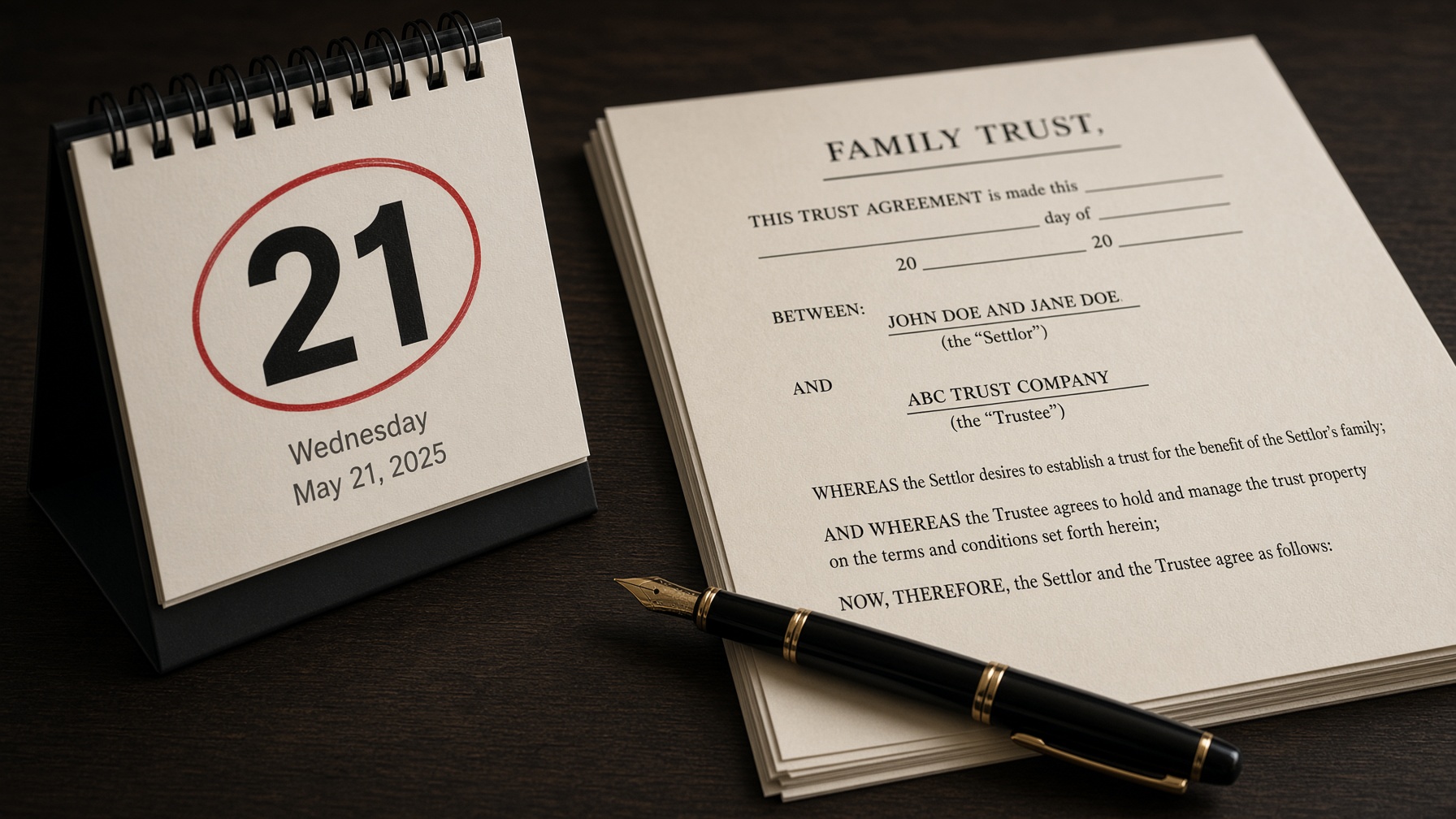
One of the most important rules affecting family trusts in Canada is the 21-year deemed disposition rule. Every 21 years, a trust is generally treated as if it has sold its capital assets at fair market value. This can trigger a significant capital gains tax bill even though no actual sale has occurred.
Illustrative tax-saving example:
A family trust holds shares and investments that have grown by $1.8 million in unrealized capital gains. If the 21-year anniversary arrives with no planning, the trust could face a tax liability of several hundred thousand dollars. By distributing the assets to beneficiaries in a planned way before the 21-year mark (or by implementing a carefully timed reorganization), much of that gain can often be realized in the hands of beneficiaries who may have lower tax rates, available exemptions, or the ability to claim the Lifetime Capital Gains Exemption. In many cases, early planning has reduced the effective tax cost by 40–60% compared with doing nothing.
Common strategies include:
Distributing assets out of the trust before the 21-year anniversary
Using a carefully timed estate freeze or reorganization
Coordinating the trust with other planning vehicles
Reviewing the trust terms well in advance of the deadline
How We Can Help
We monitor the 21-year timelines for our clients’ trusts and develop practical strategies well in advance. Our focus is on preserving as much of the trust’s value as possible while remaining fully compliant with Canadian tax rules.
Do you have a family trust approaching its 21-year mark?
Contact us for a review. We will assess the potential tax exposure and outline clear steps you can take to protect the value of the trust.
Rajesh Chowdhry
Rajesh Chowdhry is Financial and Business Consultant with 30 years of experience in Estate Planning, Corporate Restructuring, Trust Formation and applying strategies to bring tax efficiencies in the structures.
Recent Posts
The Hidden Cost of Having No Financial Plan: How Canadians Are Falling Behind
September 1, 2026
If You Already Have a Trust or Freeze, Here Is How to Know Whether It Still Fits
August 29, 2026
Questions to Take to Your Accountant This Year If You Own a Private Company
August 21, 2026
Tax-Efficient Strategies for Business Owners with Significant Retained Earnings
August 15, 2026